How an interactive Lean Six Sigma experience brought process improvement to life for City employees
On June 11, the City of DeSoto did something new.
Employees from across the organization came together for the inaugural DeSoto University, an employee development experience designed to create opportunities to learn, connect, and build new capabilities.
For Dillon Morgan Consulting, it was an opportunity we were excited to be part of. But instead of introducing Lean Six Sigma through a traditional classroom presentation, we wanted employees to experience process improvement for themselves.
So, we brought LEGO bricks.
Lots of them.
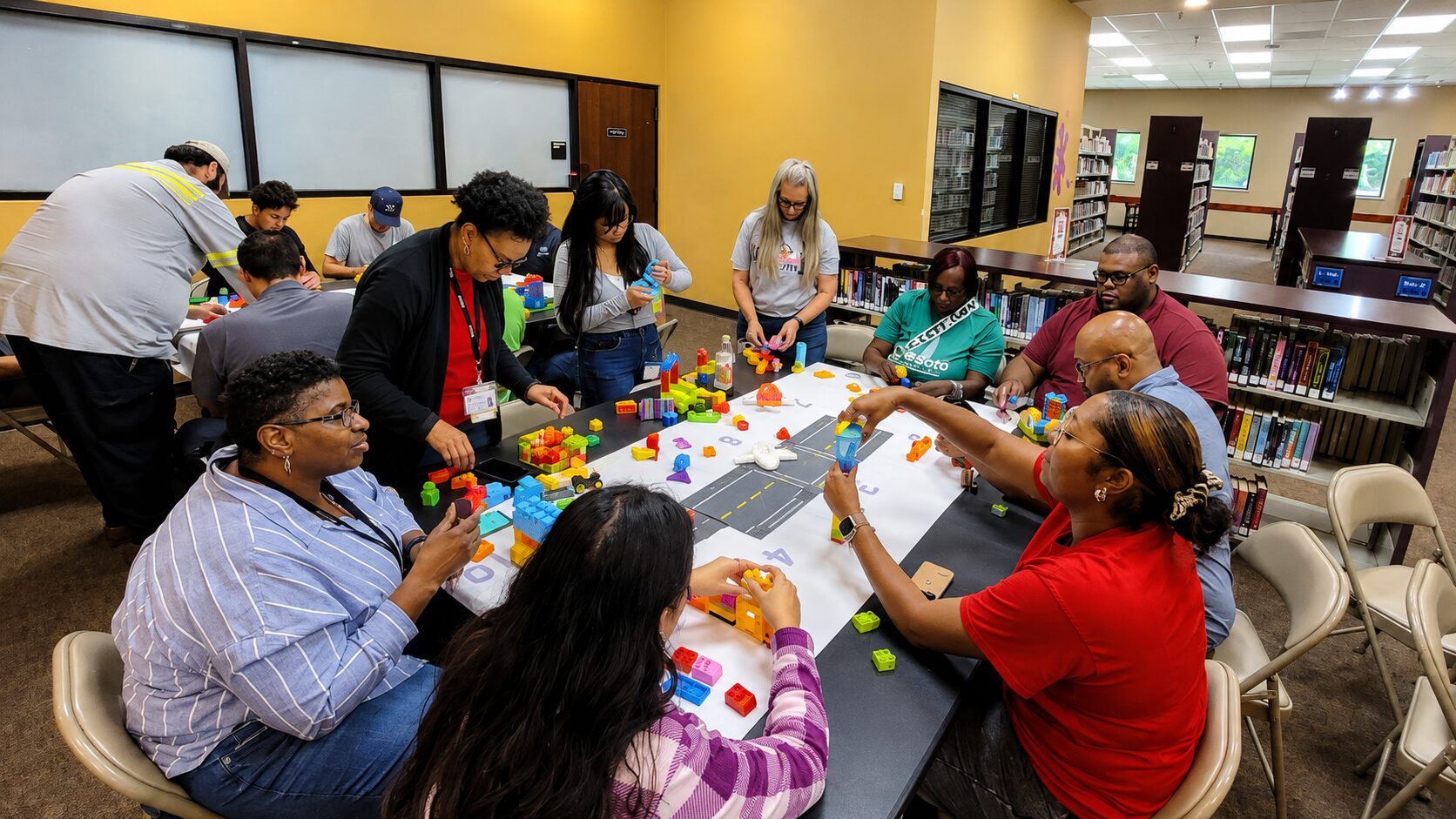
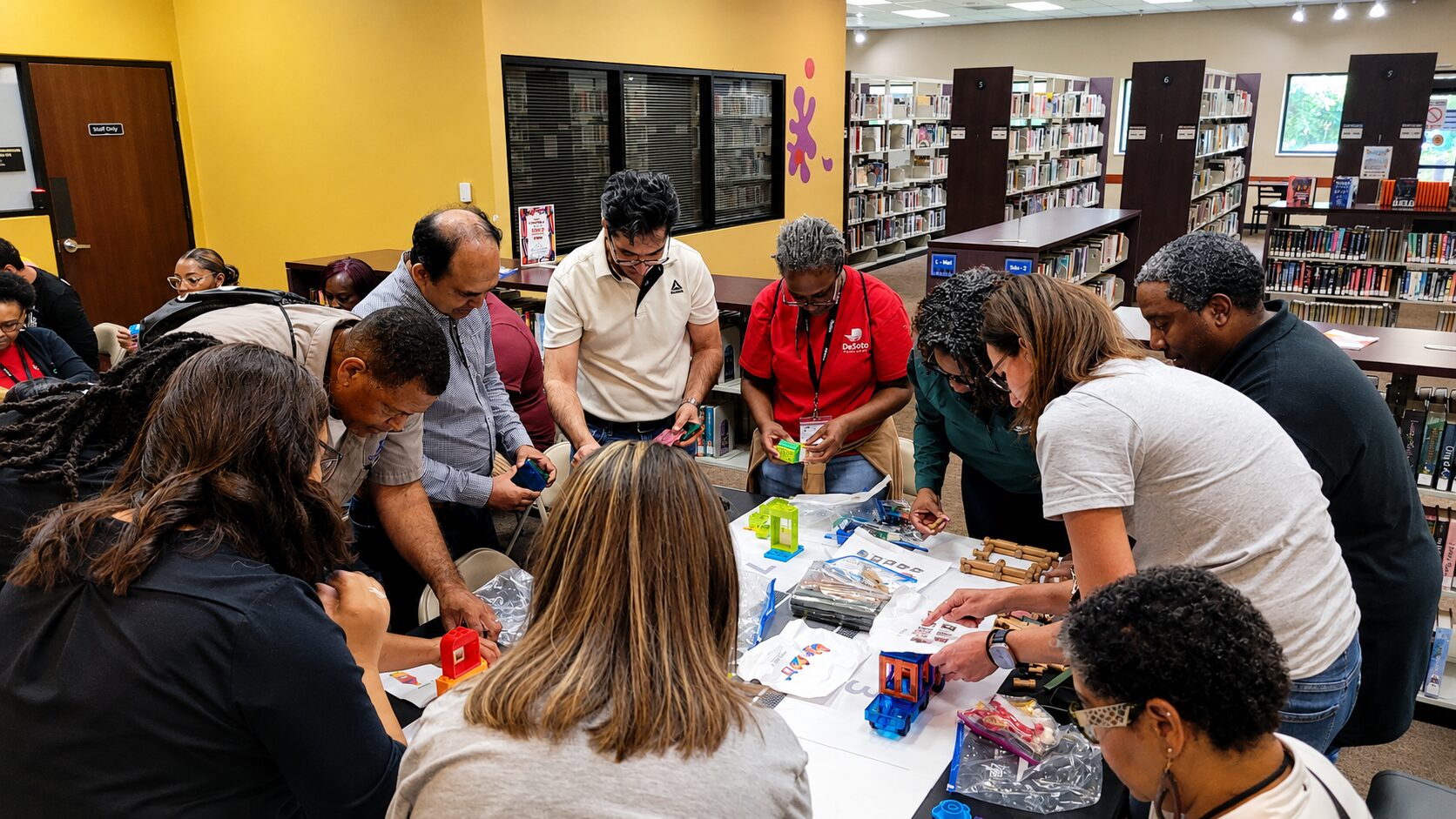
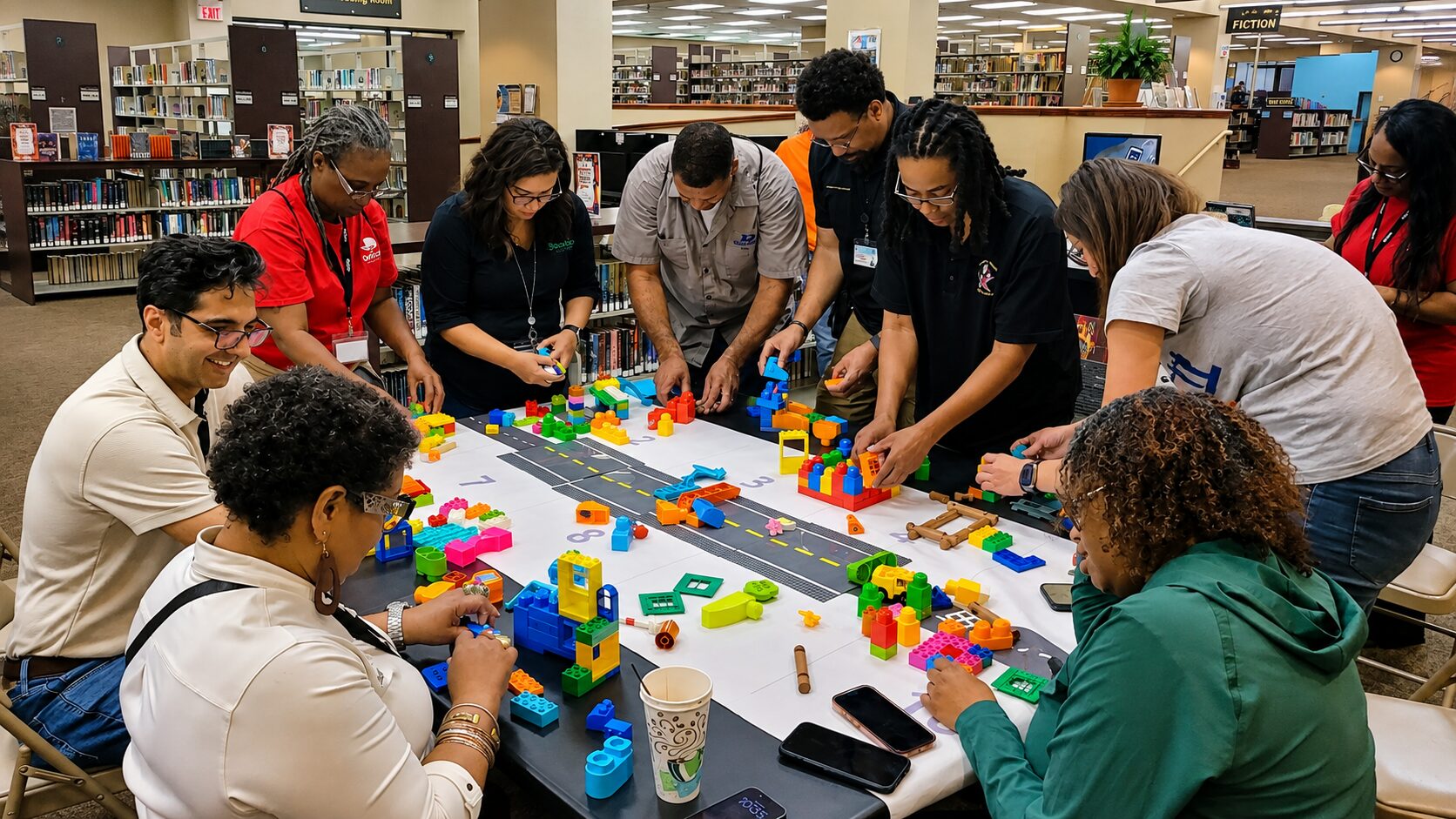
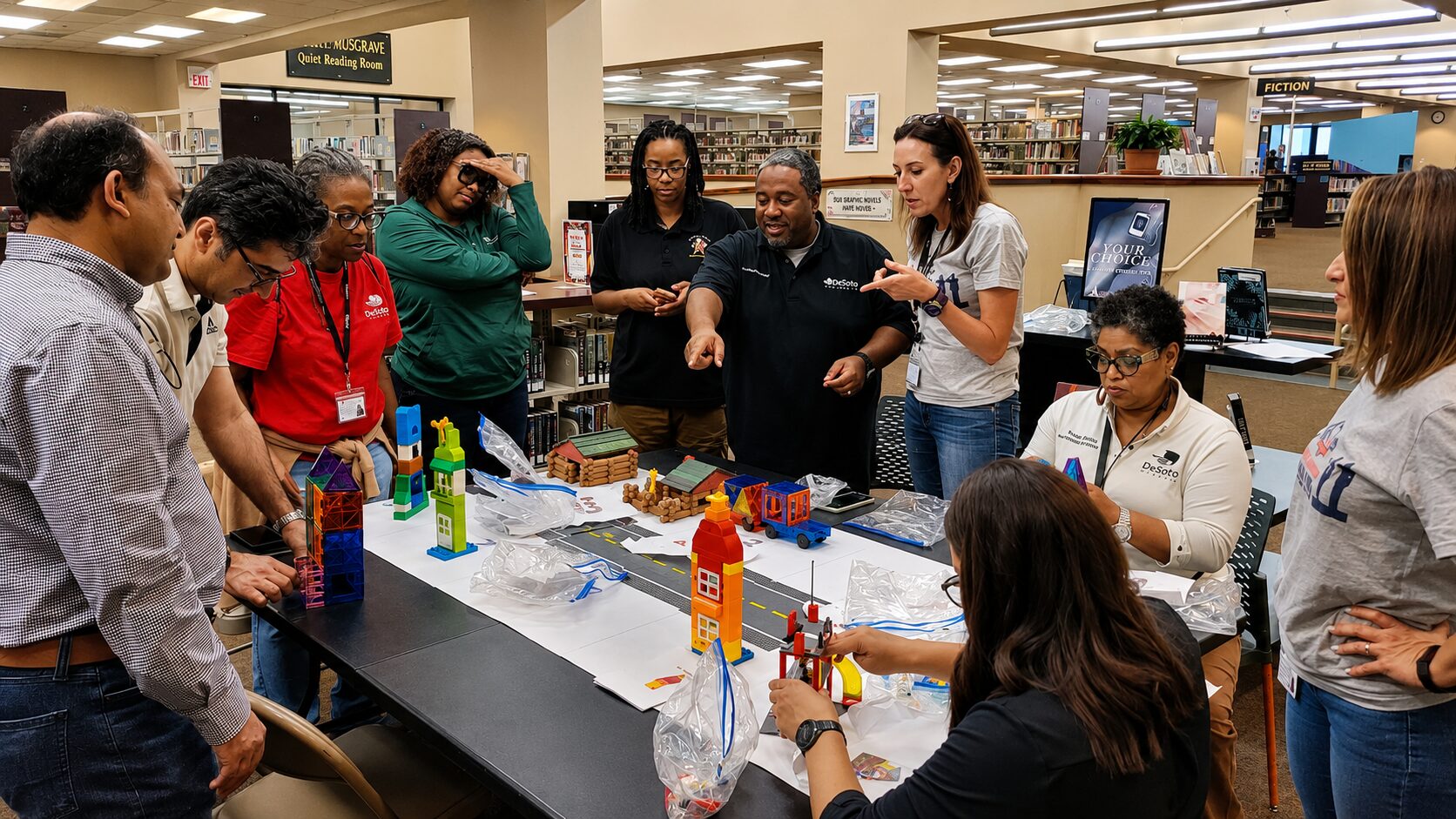
Soon, groups of City employees were gathered around tables filled with colorful building materials. They were talking, searching, sorting, building, laughing, and racing against the clock.
It looked like fun, and it was. But behind the activity was an important lesson about how work gets done.
Creating an Experience, Not Just a Training
DMC facilitated two interactive sessions during DeSoto University centered on 5S, one of the foundational methodologies of Lean Six Sigma.
5S introduces five principles: Sort, Set in Order, Shine, Standardize, and Sustain. Together, they provide a structured way to organize work, reduce unnecessary effort, improve consistency, and create an environment where people can focus more of their energy on producing quality results.
Rather than beginning with theory, participants were placed directly into an experience.
Their challenge was to build a prototype LEGO City.
Teams were responsible for creating 10 different structures that would be familiar in any community, including City Hall, a police station, fire station, library, school, hospital, recreation center, and other facilities. Each structure came with its own requirements, and teams had only 10 minutes to complete their city.
There was just one problem.
All of the building materials were mixed together.
Participants had capable teammates. They had instructions. They understood the objective. And they were motivated to get it done.
But the process made the work harder than it needed to be.
That was intentional.
The People Didn’t Change. The Process Did.
After the first challenge, participants reflected on what made the work difficult and how those obstacles affected their team’s ability to deliver.
DMC then introduced the principles of 5S and prepared the teams to try again.
The second time, something was different.
The people were the same. The assignment was essentially the same. The clock was still running.
But the system around them had changed.
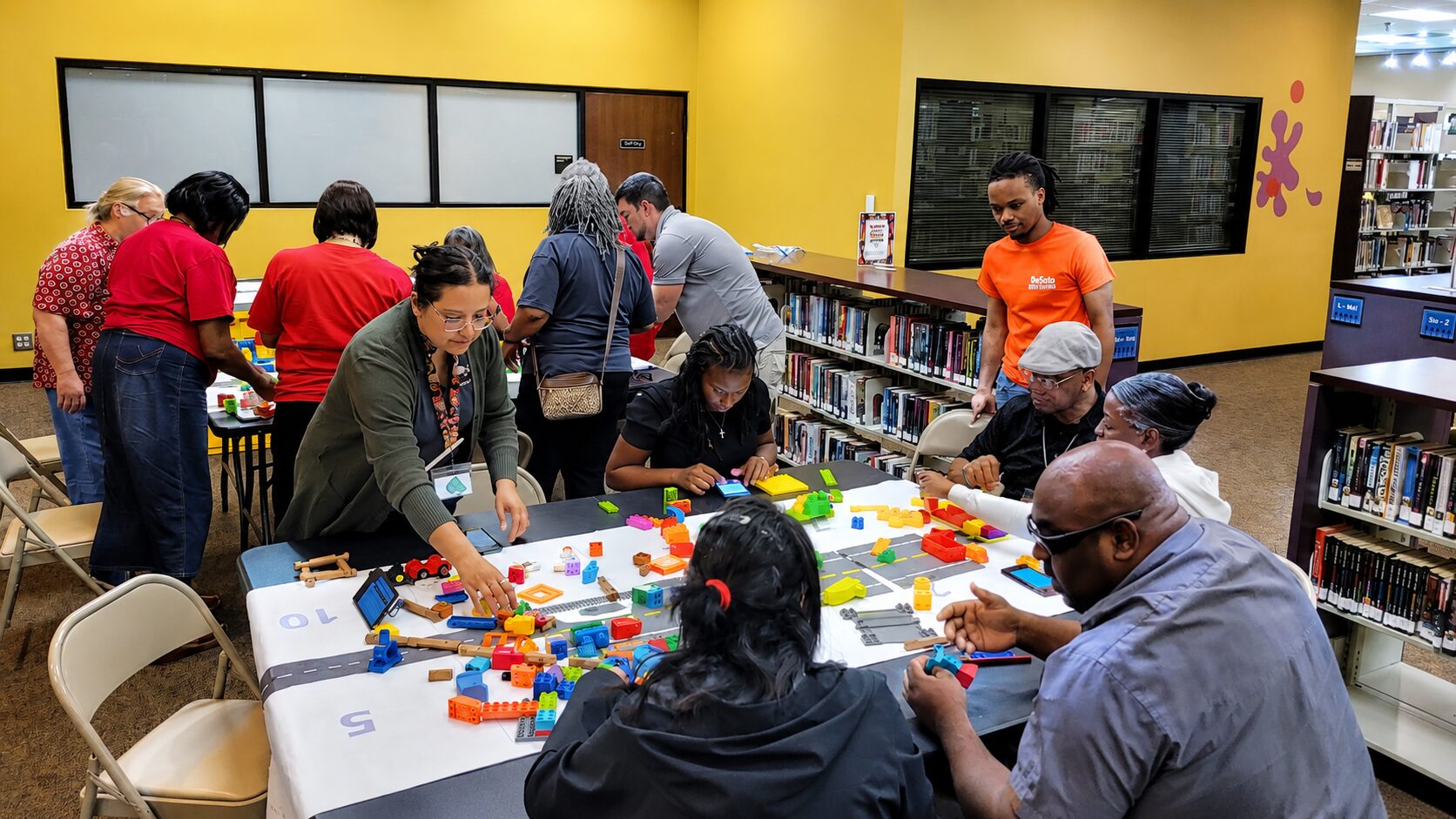
Instead of searching through mixed materials, teams received presorted and labeled building materials organized by zone. They had visual examples and clearer instructions to guide construction.
Suddenly, participants could spend less of their time figuring out how to do the work and more of their time actually doing it.
The exercise brought concepts like standardization, visual management, organization, and waste reduction to life in a way that a slide alone could not.
And it created an important connection to the workplace.
From LEGO City to City Government
The workshop was never really about building the perfect LEGO City.
It was about learning to see work differently.
Think about how often employees encounter processes where information is difficult to find, responsibilities are unclear, steps vary depending on who performs them, or significant time is spent navigating the process rather than producing the result.
Eventually, those conditions can become so familiar that they simply feel like part of the job.
Lean Six Sigma gives employees a framework for questioning those conditions.
- Where are we spending time searching for what we need?
- Where could clearer standards eliminate confusion?
- What steps are not adding value?
- Where are employees creating their own workarounds because the existing process is too difficult?
And perhaps most importantly: Is there a better way?
At the conclusion of the activity, participants were challenged to consider where they see a need for this type of organization in their own work and how 5S could make a difference.
That is where a training exercise can begin becoming something more.
An Engaged Room and an Appetite for More
One of the most encouraging parts of the experience was the response from DeSoto employees.
Both sessions generated strong participation and positive feedback. Employees leaned into the exercise, worked collaboratively, and engaged in the conversations that followed. We also heard interest in continuing the conversation around Lean Six Sigma and process improvement beyond DeSoto University.
For DMC, that response was especially meaningful.
We believe transformation becomes sustainable when the people closest to the work have the ability to recognize opportunities and participate in improving them.
That does not mean every employee needs to become a Lean Six Sigma expert.
It means organizations can give employees tools that help them look at familiar problems through a different lens.
Sometimes the first step toward improvement is simply recognizing that the current way of working is not the only way.
Celebrating DeSoto’s Investment in Its People
The bigger story, however, is DeSoto University itself.
Launching an employee development experience for the first time requires an investment of leadership, time, creativity, and organizational energy. The City created an opportunity for employees to step outside of their normal responsibilities, engage with colleagues, explore new concepts, and bring those ideas back into the organization.
That matters because workforce development can accomplish more than building individual skills.
Done well, it can build organizational capability.
DMC was proud to contribute to the City’s inaugural DeSoto University and grateful for the enthusiasm employees brought to our sessions. The experience also reinforced something we see repeatedly in our work with organizations: learning does not have to feel like a lecture to produce meaningful insight.
Sometimes a hands on challenge, a little friendly competition, and a table full of LEGO bricks can create exactly the kind of conversation an organization needs.
What Other City Leaders Can Take Away
DeSoto’s inaugural University offers an idea worth considering for other municipal leaders.
Employee development does not have to be disconnected from organizational performance. It can create opportunities to expose employees to practical tools while also strengthening collaboration, problem solving, and continuous improvement.
And the learning experience itself matters.
When employees can experience a concept, apply it, discuss it, and connect it to their own work, training becomes more memorable and more relevant.
For DMC, that is one of the most exciting opportunities in programs like DeSoto University: meeting employees where they are and finding creative ways to make transformation principles accessible to everyone.
The LEGO cities may have only lasted for the session.
The opportunity is for the thinking behind them to last much longer.