Accelerating Capital Delivery Starts Before the Bid
A mid-sized North Texas city was managing a large portfolio of capital projects across infrastructure and facilities. With approximately 13 departments involved, leadership recognized that improving delivery timelines would require stronger alignment across the entire system.
While delays were often most visible between bid and construction start, a deeper look revealed that many of the root causes originated earlier – during design, coordination, and project readiness.
City leadership partnered with Dillon Morgan Consulting to evaluate the full bid to build process and identify opportunities to reduce cycle time and improve delivery performance.
This case study highlights one of the most influential drivers of project timelines: Engineering readiness.
The Opportunity: Delays Begin Before Procurement
Initial analysis showed that the design phase was one of the longest and most variable portions of the capital delivery process.
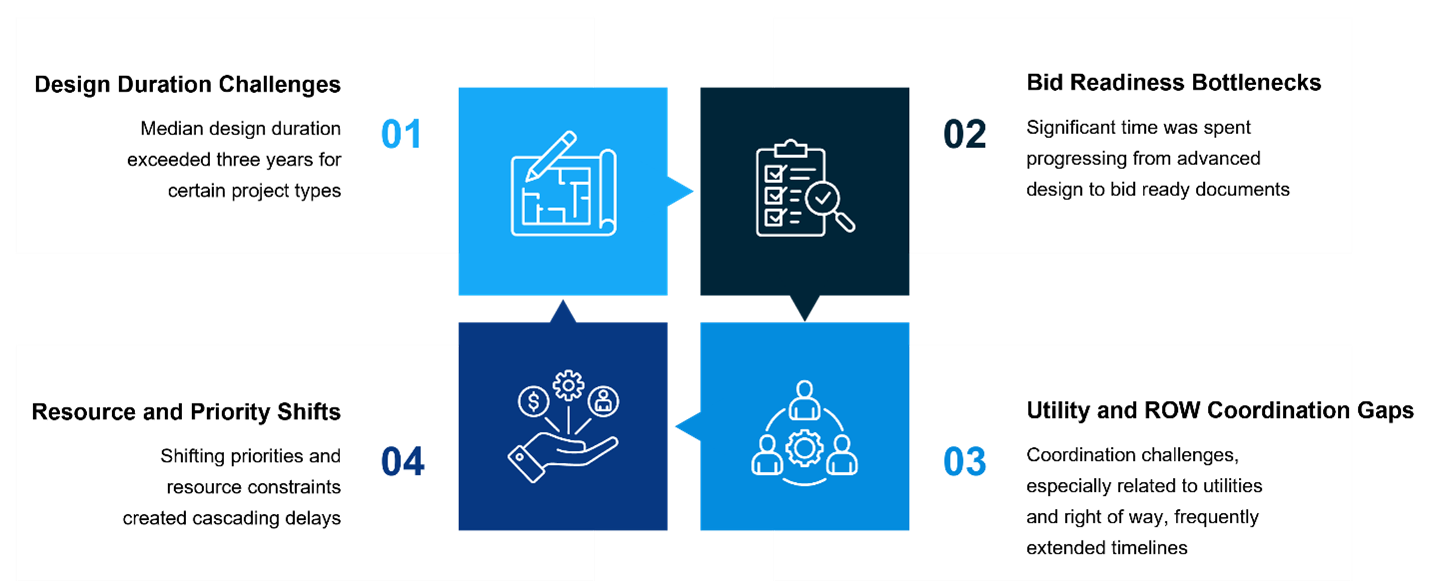
In many cases, projects entered procurement without full readiness, leading to delays during bidding, contracting, and mobilization.
The key insight: The speed of construction is determined long before the bid is released.
Key Engineering Improvements
1. Earlier Coordination with External Stakeholders:
Coordination challenges were a consistent source of delay.
The city improved timing and structure of engagement during earlier phases of design, ensuring that dependencies were identified and addressed sooner.
Result: Reduced likelihood of downstream delays impacting construction start.
2. Strengthened Right of Way Readiness
Right of way and easement acquisition were frequently on the critical path.
The city improved alignment between Engineering and supporting functions and clarified requirements at key design milestones.
Result: Fewer delays caused by incomplete property readiness.
3. Design Completion Discipline
Projects often moved forward without a consistent definition of what “ready for bid” meant.
The city established clearer expectations for design completeness before procurement.
Result: Reduced late stage changes and smoother transitions into procurement.
4. Improved Project Prioritization and Resource Alignment
Shifting priorities and limited capacity created inefficiencies across the portfolio.
The city increased visibility into project sequencing and aligned resources more effectively.
Result: More predictable timelines and fewer disruptions.
5. Centralized Project Visibility
A centralized view of project timelines and dependencies was strengthened to support coordination across departments.
Result: Improved communication, better decision making, and reduced delays caused by misalignment.
Results
Engineering improvements contributed to both measured and projected gains:
- Estimated reduction of 90 to 180 days in design timelines
- Additional reduction of 90 to 120 days in construction start timelines through improved readiness and coordination
In addition to time savings, the city experienced:
- Improved predictability in project delivery
- Fewer delays related to coordination and dependencies
- Better alignment between Engineering, Procurement, and project execution
- Reduced rework and late stage changes
Engineering readiness became a key driver of overall system performance.
What City Leaders Should Take Away
- Delays often originate early. Improving design and coordination phases has the greatest impact on overall timelines.
- Readiness drives speed. Projects that enter procurement fully prepared move faster to construction.
- Coordination matters. Addressing dependencies earlier reduces downstream risk.
- Visibility enables alignment. Shared understanding of timelines improves decision making.
- System performance depends on integration. Engineering, Procurement, and other functions must operate with shared expectations.
What’s Next
This article is part of the From Bid to Build series, which explores how a mid-sized North Texas city improved capital delivery performance through system alignment.
Future perspectives will highlight the roles of Project Management, Utilities, and leadership in sustaining these improvements.