
Cities are hubs of economic growth, innovation, and cultural diversity. However, many face challenges due to outdated processes that stifle progress and discourage investment. The development process, in particular, is often a convoluted maze of procedures, multiple resubmittals, and extended timelines. This frustrates developers, strains city resources, and hampers economic growth.
A Case for Change
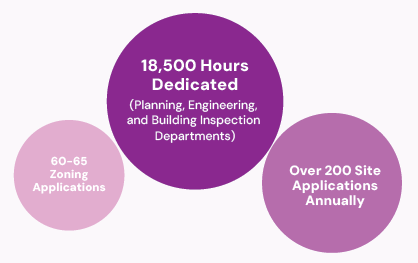
Dillon Morgan Consulting (DMC) recently partnered with a suburban city in the Dallas- Fort Worth area to revamp its development processes. The city, with a population of 250,000+, having reached full occupancy with no remaining vacant land, faces a pivotal juncture in its urban evolution. As a mature urban center, it must now pivot its focus towards redevelopment initiatives to foster future growth and vitality. This transition from greenfield development to urban renewal represents a critical shift in the city’s approach to sustainable expansion and economic revitalization. Its planning department processes approximately 60–65 zoning applications and over 200 site applications annually, of which about <25% site permits are issued. The city’s three key departments – planning, engineering, and building inspection – collectively dedicate an estimated 18,500 hours annually to the front end of the development process.
The Volume of the City’s Development Process
Insights From The Field
The city recognized that its transition from a development to a redevelopment environment necessitated a fundamental shift in approach. Two key factors drove this realization:
- The intensely collaborative nature of redevelopment requires high degrees of communication and coordination both within city departments and with developers.
- The evolution of developer profiles from large-scale master developers to smaller and medium-sized firms or individuals.
1. Uncovering Latent Inefficiencies with Process Mapping
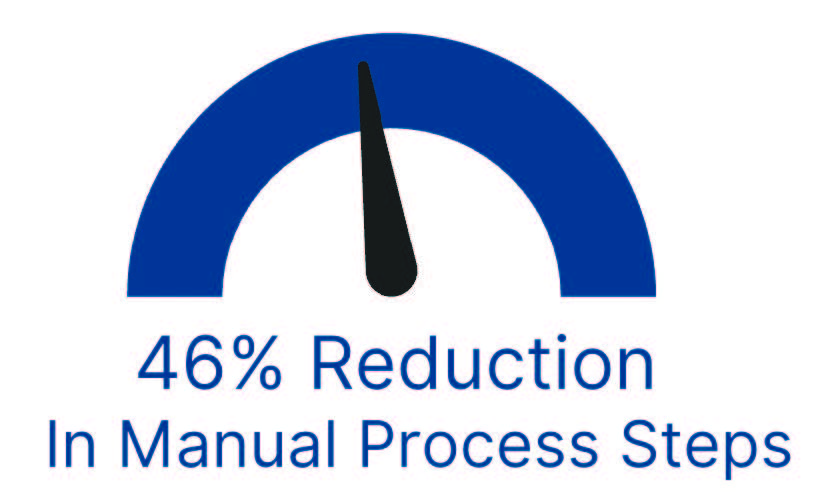
Over time, departmental staff often introduce new steps or workarounds, which accumulate into unwieldy processes. Over several years, these process steps evolved but are rarely revisited to check for efficiencies. By meticulously mapping 635 process steps across nine organizations, the DMC team uncovered a significant amount of redundancy and complexity. This exercise alone led to a 46% reduction in manual process steps, streamlining operations considerably.
2. Communication Breakdown – Root Cause for Resubmittals
Quick analysis of past projects indicated an average of 3.4 resubmittals for a standard project. Among all attributed causes, communication quality was identified as the principal root cause leading to resubmittals. The developer community attributed 30% of issues to communication-related problems, while city staff estimated this figure at 40%. Further analysis by DMC consultants on the communication breakdown aspect, using techniques like Nominal Group Technique (NGT) and KJ Methods to draw out affinity groups, revealed that developers not responding to comments contributed 21% to the issue, while 16% pertained to comment comprehension and intent. This finding underscores the importance of clear, concise, and timely communication in ensuring effective development.
Among all attributed causes, communication quality was identified as the principal root cause leading to resubmittals.
3. Cross-Functional Collaboration
Unlike many other City processes, Development has a closely interlinked process flow. There were at least 9 departments and up to 11 different processes such as pre-submittal, platting, zoning etc. that were involved in creating a future state development process for the city. The involvement of cross-functional teams from various city departments and external developers was crucial in identifying pain points and developing solutions. This collaborative approach ensures buy-in from all stakeholders and leads to more comprehensive improvements.
4. Technology as an Enabler – The Key to Effective Process
Organizations often deploy tools with default processes, training staff accordingly. However, a more effective approach shifts from Tool -> Process -> People to People -> Process -> Tool. This means the organization first determines the process that best addresses its unique needs, then tailors the tool to support that process. In the case study discussed, the organization was planning to revamp its tool usage throughout the development process lifecycle, providing an ideal opportunity to redesign process flows. The project identified numerous automation opportunities, reducing manual effort and increasing efficiency. Ultimately, this laid the groundwork for implementing an enterprise wide software solution.
The Path Forward
Cities looking to embark on similar transformations should consider the following steps:
- Engage All Stakeholders: Involve city staff, developers, and other relevant parties in the improvement process to ensure diverse perspectives are considered.
- Conduct a Comprehensive Process Assessment: Map out all steps in your development process to identify inefficiencies and bottlenecks.
- Focus on Root Causes: Use data-driven techniques to identify the underlying causes of delays and resubmittals, rather than addressing symptoms.
- Leverage Technology: Leverage automation and digital tools to streamline workflows, accelerate improvement, and unlock sustainable results – enhancing, not replacing, the human effort behind lasting change.
- Implement Continuous Improvement: Create a sustainable cycle of reflection, action, and refinement that drives better outcomes over time using structured governance and KPIs.
For organizations lacking in-house expertise or bandwidth, engaging experienced consultants like Dillon Morgan Consulting can significantly accelerate and enhance transformation efforts.
The Results
Setting clear goals and measuring success are crucial components of any process improvement initiative. They provide direction, motivation, and a means to evaluate progress. In the context of development processes, these metrics help cities quantify the impact of their transformation efforts and justify the resources invested to the City.
The case study city discussed in this article saw remarkable improvements, including:
- A reduction from 3.4 to 1.8 major resubmittals per project.
- A 46% decrease in manual process steps.
- Projected significant cost savings for developers, up to 60% for large developers.
- Projected 50 fewer schematic reviews annually for both concept and detail plans.
- Improved developer satisfaction and increased attractiveness for redevelopment projects.
These metrics not only demonstrate the tangible benefits of process improvement but also highlight the potential for significant economic impact through faster development cycles and increased investment. As cities continue to refine their development processes, it’s crucial to regularly review and update these success metrics. This ensures that improvement efforts remain aligned with evolving city goals and changing urban development landscapes.
As urban areas expand, efficient, transparent, and developer-friendly processes are vital. The lessons from this case study offer a replicable framework for cities nationwide. By embracing process improvement, fostering collaboration, and leveraging technology, cities can position themselves as attractive destinations for investment while driving sustainable growth and enhancing citizen quality of life. City leaders must champion these transformations to unlock their full potential, ensuring economic vitality and operational efficiency.